
A red brick paved street lined with two-storey brick buildings and large live oaks hung with Spanish moss, in late afternoon light

Chimney cleaning and sweeping in Sanford.

A sweep brushes soot and creosote out of the flue and off the shelf above the damper, then clears the firebox and any stove pipe. Ring the office, or send a request on the form whenever you like.
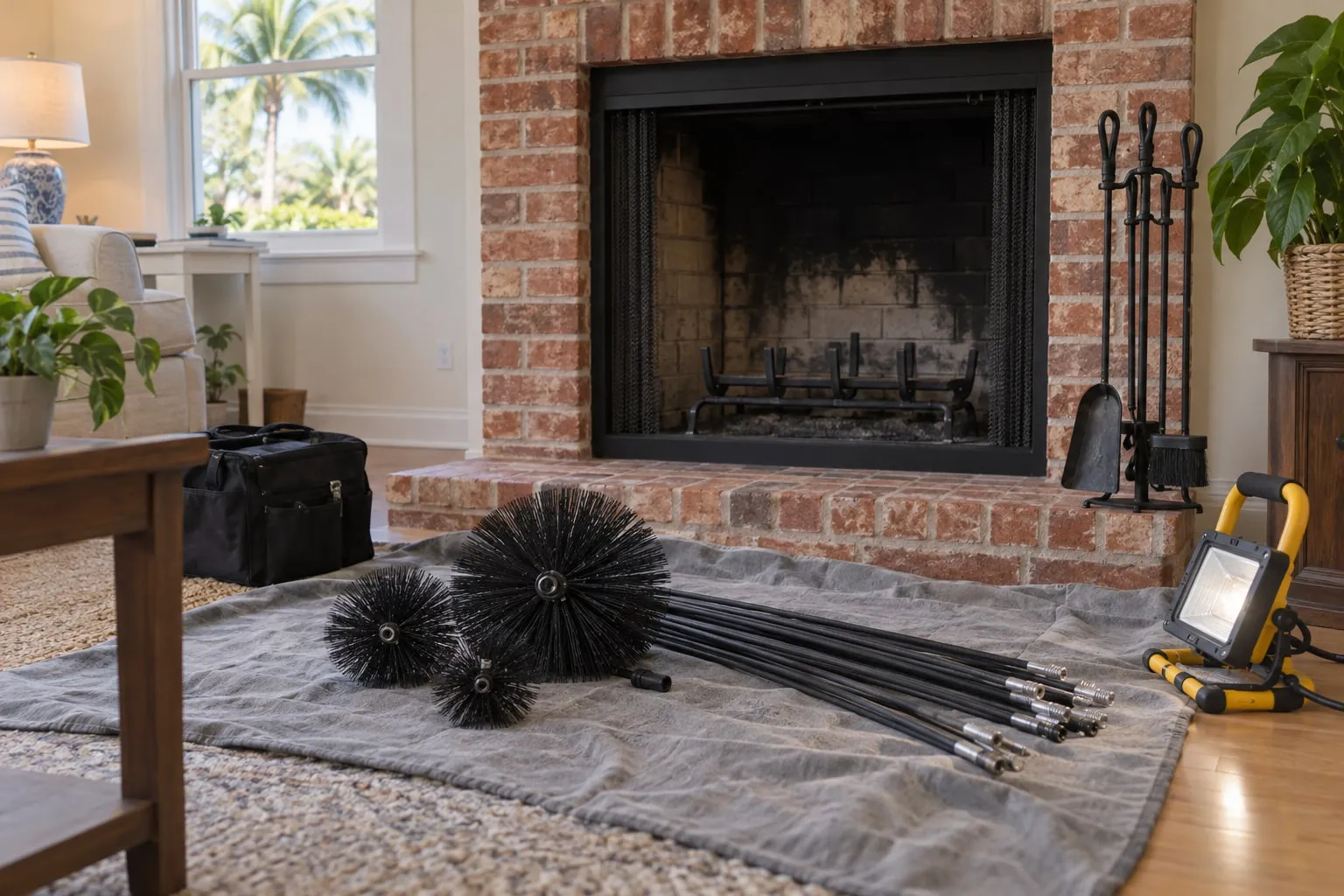
Round chimney brushes and flexible rods laid on a grey drop cloth in front of a brick fireplace
  • Based in SanfordSeminole County seat
  • A call backWe fix the day with you
  • Request formAlways open

A sweep, step by step.

What comes out of the flue, how often it has to, and what to settle before the first fire of the cool season.

  1. What comes off the walls.

    Burning wood coats the inside of a flue with a film. While it is fresh the film is dry and brushes off; after a run of slow, smoldering fires it becomes sticky tar, and eventually a hard glaze with a sheen that stiff brushes barely touch.

    The work starts at the damper and climbs toward the cap. After that the smoke shelf is cleared, and the firebox floor is last. Everything that comes loose leaves the house with us instead of staying behind to burn.

  2. When the next sweep is due.

    Burning habits decide it. A nightly fire lays down deposit much faster than a few fires spread over a winter, and a coat that is thick or glossy means a sweep is overdue.

    NFPA 211 advises an inspection every year, used heavily or not, and the inspection shows how much has built up. That is why a sweep and an inspection so often share a visit.

    In Sanford the odds favor a quiet fireplace. The airport station averages 2.3 nights a year at 32°F or below, and Census Bureau estimates for 2020 to 2024 put 23,677 of 24,875 occupied homes on electric heat as the main source, with no homes estimated to burn wood as the main fuel (margin of error 35). A flue lit a few times a winter still gathers deposit, and one left idle can fill with leaves and nests, so the annual look comes before anything else.

  3. What a clean flue buys you.

    Creosote that has piled up can catch fire inside the flue, which is how a chimney fire starts. With the deposit gone, a stray spark has little to catch.

    The fireplace also draws better. Smoke ought to rise out of the top, and a flue that is coated or partly blocked can push it back into the room as soon as the damper opens.

  4. Stoves, inserts and gas logs.

    Damp a stove down for the night and it burns cool; cool smoke drops the most creosote, mainly in the connector pipe.

    For a stove the whole smoke path is covered: the pipe off the stove and its joints, the flue or liner overhead, then the cap. Putting a gas appliance on a flue that once carried wood smoke brings in the Florida Building Code, Fuel Gas volume, which asks for that flue to be cleaned beforehand (section 501.15.2) and for the passage to be examined and found clear before an appliance is replaced (503.5.6).

  5. At the very top.

    Smoke arrives at the cap already cool, and cool smoke sheds soot onto the mesh. A choked mesh weakens the draw, though the same mesh is what holds sparks back, so it is cleared on every visit. Florida flues attract birds and bats as well: chimney swifts are federally protected and bats cannot be excluded from mid-April to mid-August, so a flue with wildlife in it calls for the right time of year.

  6. Smells on muggy days.

    Creosote is the usual culprit. A flue that has been used keeps a little, and on a muggy day, or when the draft reverses, the odor is drawn down into the room. A sweep takes away the source; a shut damper and a cap in place handle whatever is left.

Reserve a sweep

Sweeping questions, answered.

Brief answers, each with its source where one exists.

How can I tell when a sweep is due?

Thickness of the coat says more than the date. The yearly inspection NFPA 211 advises reveals how much has accumulated and what kind it is; glossy or tar-like deposits mean the sweep should happen soon.

Sweep or inspection: which one do I need?

An inspection looks at the whole chimney against the three levels in NFPA 211. Because soot can hide damage, a single visit often covers both jobs.

What is glazed creosote?

Glazed creosote is the stage at which deposit has hardened into a slick, dark crust. It tends to form when smoke cools slowly, as it does in a damped-down stove, and brushes hardly mark it, so seeing it is a cue to book quickly.

Is sweeping needed for gas fireplaces?

No creosote forms, but the vent still has to stay open. The Chimney Safety Institute of America advises yearly inspection of gas-fired chimneys too, since debris or a bird's nest can plug the flue.

Why does the smell get worse in summer?

Hot, damp air carries creosote odor, and a downdraft can push it indoors. Take the deposit out and the smell has no source left.

How do I book a sweep?

Ring (321) 551-1462, or use the form lower on this page, which accepts requests at any hour. A person calls back to agree a day.

Tell us what you have seen.

Put a few lines on the form or pick up the phone. A person rings you back and the two of you choose a day.

  1. 1You get in touch A phone call, or a short message on the form.
  2. 2A person rings back The two of you talk it through and settle on a day.
  3. 3Roof to hearth The visit follows the stack down, part by part.
  4. 4You decide We tell you what we found, and what happens next is your call.

Phone

Ring the office and tell us what you need.

(321) 551-1462

Request form

Always open, day or night

What do you need?

Which service?

About your fireplace

What does it burn?

Reaching you

Best time for the call back

Back

First cold front on the way, or a storm that left something bent on the roof? Get in touch.