
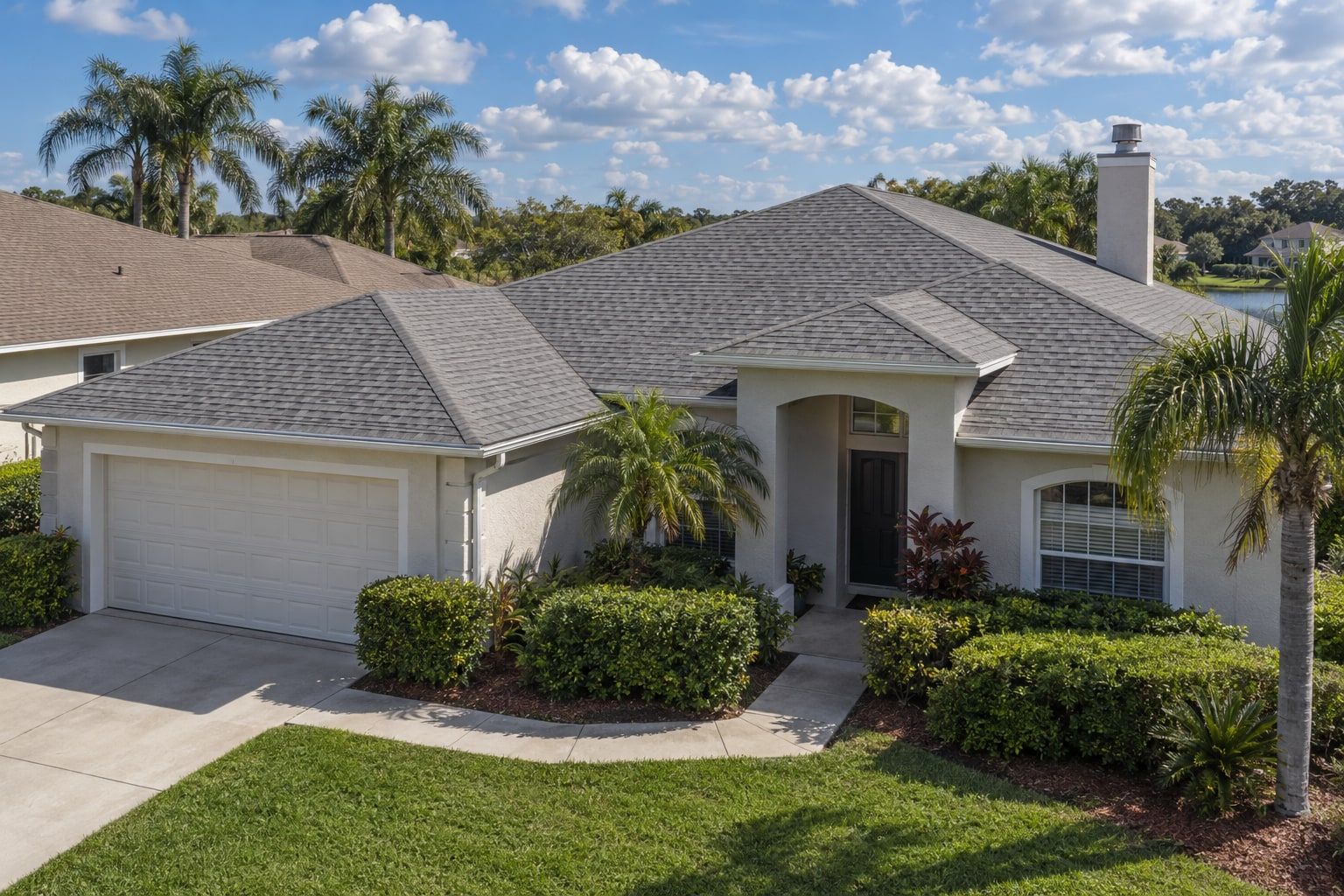
Chimney inspections in Sanford.
Each part of the chimney is examined on its own, so a small fault gets caught before it spreads. Ring the office, or use the form to request a visit at a time that suits you.
- Based in SanfordSeminole County seat
- A call backWe fix the day with you
- Request formAlways open
What an inspection examines.
Six parts, taken in order from the roofline to the hearth.
The cap, at the roofline.
Sun, wet-season downpours and wind strike the cap before any other part. Its mesh keeps sparks in and animals out, and its lid sheds the rain.
Look forstorm dents, a loose mesh, rusted fasteners on the lid.
The crown, beneath the lid.
A hairline crack in a crown drinks up water in a downpour and stays damp long afterward. Florida's code asks for a cap sloped to shed water, with a drip edge and a caulked break at the flue liner (R1003.9.1).
Look forfine cracks, chipped corners, a slab lifting from the flue, a missing drip edge.
The flashing, at the seam of roof and stack.
Flashing, a metal collar, seals the seam where chimney and roof meet, and wind-driven rain probes any edge that has lifted. A chimney more than 30 inches wide along the ridge also needs a cricket, flashed and counterflashed against the masonry (R1003.20).
Look fora curled edge, cracked sealant, rust streaks, damp on the ceiling below, no cricket on a wide chimney.
The flue liner, set into the masonry.
Smoke and gases leave the house through the liner, and Florida's code says masonry chimneys must have one (R1003.11). Sanford's median home dates from 1994, so a typical flue has run for over thirty years, long enough for a tile to slip or a seam to rust through.
Look fora seam rusted open, a tile cracked or out of place, a liner that does not suit the appliance it serves.
The smoke chamber and damper.
The first deposits land on the shelf above the damper. A house with a handful of fires a year fills it slowly, yet it is never empty.
Look forglossy or tar-like deposits, a damper that will not close, a shelf that flakes or leans.
The firebox, on the hearth.
Heat works on the firebox walls year after year, splitting firebrick and loosening mortar joints. A narrow gap is a small repair; one that has passed heat to the framing is a bigger one.
Look forgaps opening in the mortar, firebrick that sheds flakes or cracks, a hearth that rocks underfoot.
The three inspection levels.
NFPA 211, the standard for chimneys, fireplaces and vents, sets out three inspection levels, each reaching deeper than the one before.
Level 1
A chimney in ordinary use that has not been changed.
Includes Anything visible or within arm's reach; no parts removed.
Level 2
Buying, selling or inheriting the house; a new heating setup; a chimney fire; any other event that might have harmed the system.
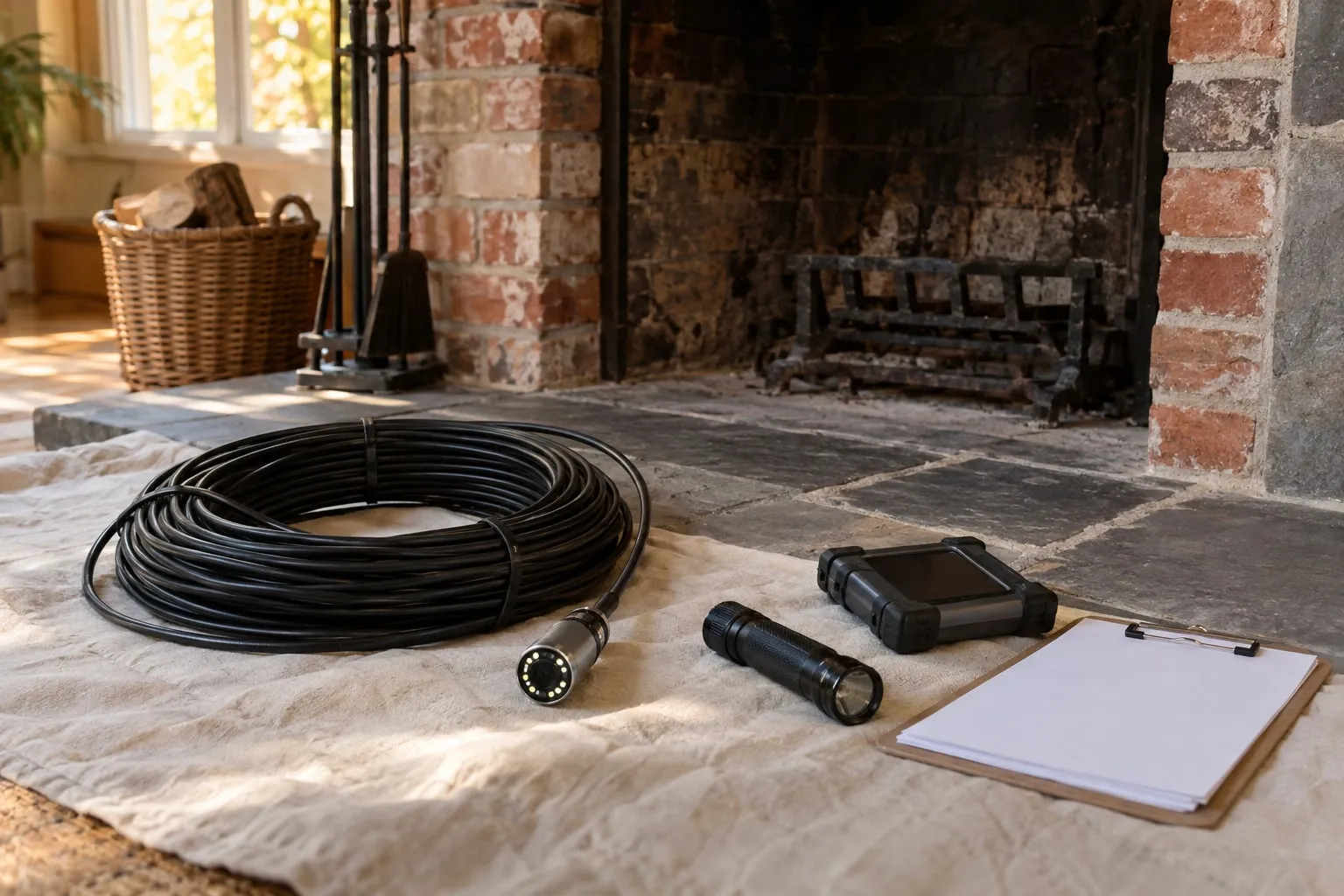
Includes Everything in Level 1, with the attic and crawl space added, and a camera sent up the inside of the flue.
Level 3
Something hidden is suspected and Level 2 has not settled the question.
Includes Level 2 plus the concealed spaces, reached by opening part of the structure if need be.
Source: NFPA 211 inspection levels, as summarized by CSIA, the Chimney Safety Institute of America.Reserve an inspection
When an inspection is worth booking.
A fault noticed only once it shows is a fault noticed late. These are the moments when an inspection earns its keep.
Inspection questions, answered.
Brief answers, each with its source where one exists.
Must I have an inspection every year?
NFPA 211 advises one each year. Whether a law requires it for your home depends on local codes. Sweeping is separate, because how often that is needed depends on how much you burn.
Does an inspection make sense when buying or selling?
Yes. Sales and transfers are among the occasions for which NFPA 211 asks for Level 2. That level also covers the spaces above and below the house and puts a camera in the flue, where Level 1 is limited to what can be reached.
What does an inspection cover?
All of it, roofline downward: cap, crown and flashing first, then liner, then smoke chamber and damper, and the firebox last. Each part has its own list above.
How do I book an inspection?
Ring (321) 551-1462 or send the form below, which takes requests at every hour.

Tell us what you have seen.
Put a few lines on the form or pick up the phone. A person rings you back and the two of you choose a day.
- 1You get in touch A phone call, or a short message on the form.
- 2A person rings back The two of you talk it through and settle on a day.
- 3Roof to hearth The visit follows the stack down, part by part.
- 4You decide We tell you what we found, and what happens next is your call.
Request form
Always open, day or night