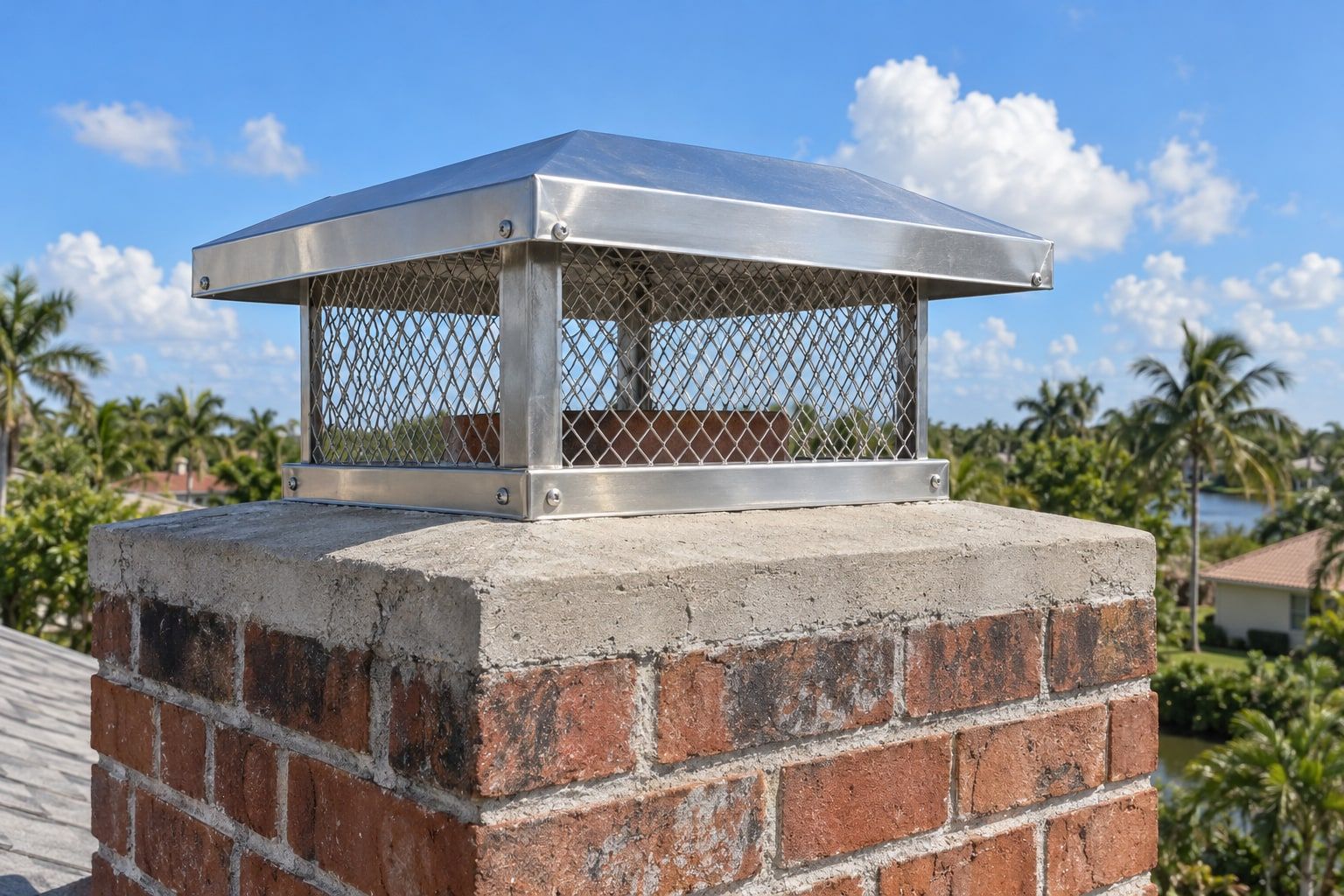
A stainless steel chimney cap with mesh sides on top of a brick chimney with a smooth concrete crown, against a blue sky with a few clouds

Chimney repair in Sanford.

The repairs here are to the parts that wear out first: crowns, caps, flashing, mortar, firebrick and liners. The idea is to step in while the damage is minor, before water and heat make it worse.
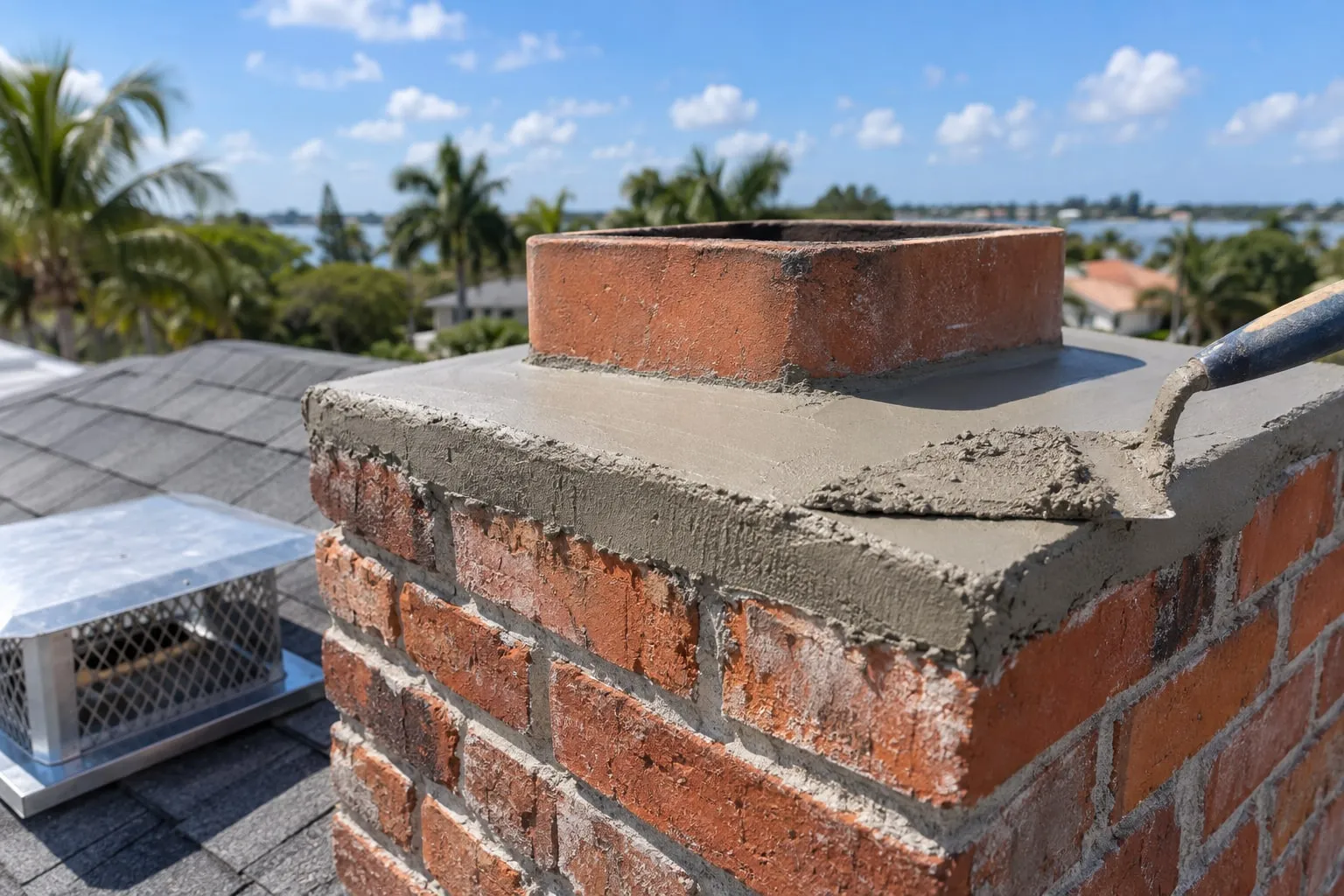
A mason's trowel resting on a fresh grey mortar crown at the top of a red brick chimney
  • Based in SanfordSeminole County seat
  • A call backWe fix the day with you
  • Request formAlways open

What gets repaired, from the top down.

Each part of a chimney ages in its own way. These are the common repairs, set against Central Florida weather.

  1. Crowns.

    The crown is the slab across the top of the masonry, and its task is to throw rain off the roof and away from brick and flue. The Florida Building Code asks for it to be sloped, with a drip edge and a caulked break around the liner (R1003.9.1). No other part of the stack is more exposed.

    From June through September the Orlando Sanford Airport station normally collects 28.49 inches of rain. A hairline crack can be sealed, whereas a slab that crumbles or has pulled away from the liner has to be removed and recast.

  2. Caps and mesh.

    A cap keeps rain, birds and squirrels out of the flue, and its mesh is what holds sparks back. The Florida code sizes the spark arrestor and the rain cap alike: free area at least four times that of the flue outlet (R1003.9.2 and R1003.9.3).

    Storms dent metal caps, wind works them loose and rust eats them. After bad weather, check for dents, screws that have backed out, rusted seams, and mesh that sags or is clogged. Chimney swifts are federally protected, and the Fish and Wildlife Service asks that a flue they use stay uncapped, so a new cap waits until the birds have gone.

  3. Flashing at the joint.

    Flashing closes the gap where chimney meets roof. Wind-driven rain finds a lifted edge or a sealant bead that has dried and split, and indoors the first sign is often a brown stain on the ceiling or damp on the attic wall beside the chimney. If the chimney is more than 30 inches wide along the ridge, a cricket behind it is required, flashed and counterflashed where it meets the masonry (R1003.20).

  4. Brick, stucco and the joints between.

    Mortar is the sacrificial part, built to wear out ahead of the brick. Once joints open, moisture is drawn in behind the brick face and the surface starts to flake, a failure called spalling.

    Tuckpointing rakes out the tired mortar and packs fresh in while the brick is still sound; a brick split through or deeply flaked is cut out and replaced. In three of Sanford's four local historic districts (Downtown Commercial, Sanford Avenue and Sanford Residential), any exterior work, repairs included, needs a Certificate of Appropriateness before it begins, and the city's historic-district rules name the decay of exterior chimneys as neglect an owner must prevent.

  5. Inside the firebox.

    The firebrick and its mortar take flame and heat directly. If joints gape or bricks crack, heat may reach the wood framing behind, and a small gap closed early keeps that from happening.

  6. The flue liner.

    Running from damper to cap, the liner keeps smoke and heat away from the structure of the house, and Florida's code says a masonry chimney must be lined. A cracked or shifted tile, or a corroded seam in a metal liner, can let heat reach the framing and fumes reach living space, and neither can usually be seen from the roof or the firebox. Only a camera lowered into the flue, as in a Level 2 inspection, shows such a fault. Sanford's median home dates from 1994, so the typical flue has served for over thirty years.

  7. Metal lids and chases.

    Not every chimney is masonry. A framed one is a wooden box styled to match the house and closed with a sheet-metal lid, and where the flue inside it is factory-built the code wants it listed and labeled (R1005.1). Once the lid rusts through or sags, water collects on it and drains into the chase. A screened flue cap beneath a lid that sheds water keeps the interior dry.

Ask about a repair

Repair questions, answered.

Brief answers, each with its source where one exists.

Why do crowns crack?

Being the top of the stack, a crown takes every downpour and every baking afternoon. A hairline crack that holds water lets moisture creep into the brick and the flue; sealed early it stays a small job, and left alone it grows.

Is a damp hearth a sign of trouble?

A damp hearth or a ceiling stain close to the chimney almost always points to water entering from higher up: the cap, the crown, the flashing or worn mortar. An inspection can trace where.

What is tuckpointing?

It is the replacement of worn mortar joints with fresh mortar. Mortar is meant to wear before brick does, so some loss is normal; trouble starts once joints open. Repointing while the bricks are still sound keeps them seated, whereas joints left open let water in behind the face.

Does a chimney need a cap?

Almost always. Without one, rain, birds and squirrels reach the flue and nothing holds sparks in. Florida's code asks a masonry chimney for a cap sloped to shed water (R1003.9.1), with a spark arrestor and rain cap sized at four times the flue outlet.

Will I see the plan before work begins?

Yes. You get a walk-through of the findings, cap to firebox, and then choose which repairs to do, and when.

How do I get started?

Ring (321) 551-1462, or write on the form below what you have noticed; it accepts requests at any hour.
Tell us what you have seen.

Put a few lines on the form or pick up the phone. A person rings you back and the two of you choose a day.

  1. 1You get in touch A phone call, or a short message on the form.
  2. 2A person rings back The two of you talk it through and settle on a day.
  3. 3Roof to hearth The visit follows the stack down, part by part.
  4. 4You decide We tell you what we found, and what happens next is your call.

Phone

Ring the office and tell us what you need.

(321) 551-1462

Request form

Always open, day or night

What do you need?

Which service?

About your fireplace

What does it burn?

Reaching you

Best time for the call back

Back

First cold front on the way, or a storm that left something bent on the roof? Get in touch.